

God Kept Me A Personal Testimony Shared in Trust - Ning Trouble | HSDA Newsletter Team There are moments in life when someone doesn’t just tell you a story they entrust you with their testimony. What I received was not simply information, but the lived experience of a woman who walked through darkness and survived by the mercy of God. She spoke to me personally. Her voice carried both pain and peace. Pain from what she had endured, and peace from what God had brought her through. Her life began with loss. She lost her mother at a very young age, and that early grief shaped much of her emotional journey. Growing up without that covering left her vulnerable in ways she could not fully understand at the time. Like many searching for love, stability, and belonging, she eventually entered a relationship believing she had found someone who would love and protect her. But what began as hope slowly became captivity. She described how the relationship changed over time how love turned into control, fear, emotional abuse, and then physical violence. Behind closed doors, she endured things no woman should ever have to experience. Yet she stayed, like so many do, holding on to the hope that things might change, especially as children came into the picture. Instead, the abuse deepened. There is a weight in hearing a woman describe not just pain, but survival how she learned to live in silence, how she carried fear while still trying to care for her children, how she functioned while breaking inside. Domestic violence does not only injure the body; it fractures the mind and slowly erodes a woman’s sense of self. Then came the night she will never forget. After the birth of her youngest child, the violence escalated to a level that almost took her life. In her own words, she described how a weapon was used against her body, causing catastrophic injuries. Her stomach was torn open, and in that moment, everything should have ended. But it did not. She told me how she escaped that house how she ran into the darkness of a country road while gravely wounded, her body broken, her strength fading. There were no words strong enough to fully capture that image: a woman walking through the night, fighting for her life, holding onto what remained of herself while her body was literally failing. And yet she lived. What struck me most was not only the brutality of what she endured, but the mystery of preservation. She said she did not lose as much blood as she should have. She knew without question that God had stepped in where no human help was present. “I should have died,” she said to me quietly. “But God kept me.” In that moment of testimony, it was clear this was not just survival, it was deliverance. She went on to share how recovery was not just physical, but deeply emotional and spiritual. Healing her body required surgery and time, but healing her mind and heart required something deeper, restoration. Trauma does not leave quickly. Fear does not disappear overnight. But slowly, through faith, support, and grace, she began to rebuild. What touched me most was her faith in the midst of it all. She did not only speak about what she suffered, She went on to publish a book, Ning Troubles, which detailed her struggles and how God preserved her. She saw her survival as evidence that her life still had purpose. She chose, over time, not to be defined by what was done to her, but by what God brought her through. Today, her testimony stands as a voice for women who are still in the place she once was, trapped, afraid, and unsure if escape is possible. Her life speaks quietly but powerfully: you can survive, and you can be healed. Domestic violence leaves scars that are both visible and invisible. But her story reminds us that even in the deepest suffering, God is still present. He sees. He keeps. He delivers. She is living proof that the end of abuse does not have to be the end of life. And as she shared with me personally, her words remain etched in my heart: “I should have died… but God kept me.”

God Can Restore the Years the Locusts Have Eaten By Pastor Paul Liburd | Handsworth Seventh-day Adventist Church "I will restore to you the years that the locusts have eaten." — Joel 2:25 I want to encourage you today with one simple but life-changing truth: God can restore. What have you lost? Have you lost opportunities, relationships, money, your health, or what you consider to be your best years? Perhaps you've lost your faith, your hope, or even your sense of purpose. Most of us carry regrets. We look back and think, If only I could do that again. If only I could turn back the clock. We imagine making different choices, saying different words, or taking a different path. Yet God gives us a wonderful promise that speaks directly into our losses and regrets. In Joel 2:25 He declares: "I will restore to you the years that the locusts have eaten." The Meaning Behind the Promise To appreciate the power of this promise, we need to understand what it meant to those who first heard it. Joel was speaking to an agricultural society whose livelihood depended entirely upon the harvest. Imagine spending months ploughing, sowing, and tending your fields, only to see a swarm of locusts descend. Within hours, an entire year's labour could disappear. Green fields became barren wastelands, and every hope for the future seemed lost. The devastation was overwhelming. Many of us understand that feeling—not because we've experienced literal locusts, but because circumstances have consumed years of our lives. Perhaps it was a failed relationship, poor decisions, addiction, illness, rebellion, or years spent pursuing the wrong priorities. Looking back, those years can feel wasted—years we can never recover. How often have you wished you could simply start again? The wonderful news of Joel 2:25 is this: Although we cannot turn back the clock, God can still restore. He can bring blessing where there has been loss, fruitfulness where there has been barrenness, and purpose where there has only been regret. The Locusts Were Not Outside God's Control There is, however, something in Joel's prophecy that many people overlook. God describes the locusts as: "My great army which I sent among you." (Joel 2:25) Think about that. The locusts were not outside God's control. God Himself says, "I sent them." Why would a loving God do such a thing? Because His people had drifted away from Him. They were travelling a path that would ultimately destroy them, and in His mercy God interrupted their journey. The locusts were not evidence that God had abandoned His people—they were evidence that He loved them enough to discipline them. He disrupted their plans so they would stop, reflect, and return to Him. The locusts were never intended to be the end of the story. They were a wake-up call. When God Uses Hardship Perhaps that speaks to your own life. Maybe you've experienced your own "locusts"—a painful disappointment, a devastating failure, financial loss, illness, broken relationships, or doors that unexpectedly closed. You may still wonder why those things happened. Could it be that God was using those painful circumstances to draw your attention back to Him? Throughout Scripture we see that God's discipline is never intended to destroy His children but to restore them. The purpose of the locusts was repentance. The purpose was renewal. The purpose was restoration. If God had continued blessing His people while they walked away from Him, those blessings would simply have enabled their rebellion. Instead, He lovingly interrupted their lives so they might return. Restoration Follows Repentance In Joel's message, restoration always follows repentance. The God who sent the warning is the same God who promised restoration. The God who allowed the interruption is the same God who offers hope for the future. And He offers that same hope today. Perhaps you look back and see wasted years. God says, "I can restore." Perhaps you see failure. God says, "I can restore." Perhaps you've wandered far from Him. God says, "Return to Me." The message of Joel is not merely that God restores years. It is that God restores people. When w e return to Him, we discover that His grace is greater than our failures, greater than our mistakes, and greater than anything the locusts have consumed. Can God Really Restore the Years? The answer is a resounding yes. There is nothing God cannot do. God can make your latter years so fruitful that the losses of the former years no longer define you. He can fill your life with such blessing, purpose, fruitfulness, and joy that you stop measuring life by what you have lost and begin rejoicing in what He has given. We know God is able. But perhaps you're asking another question: Will God do it for me? The good news is that Scripture answers that question. God's promise of restoration is connected to repentance. The locusts came because the people turned away from God. Restoration came when they turned back. God's invitation is wonderfully simple: "Return to Me, and I will bless you." That same principle still applies today. If you repent and return to God, He will begin His work of restoration in your life. The choice is yours. You can continue down your own path, or you can turn back to God. You can continue carrying your regrets, or you can place them into the hands of the One who restores. So the question is not whether God can restore. The question is whether you are willing to repent and return. A Prayer Heavenly Father, You have seen every mistake, every missed opportunity, and every moment of rebellion in my life. Yet You do not define me by my past. Today I repent and turn back to You. Please forgive me, receive me, and begin Your work of restoration in my life. Restore what sin has damaged. Restore what circumstances have stolen. Restore my joy, my hope, my purpose, and my walk with You. Thank You that Your grace is greater than my failures and Your mercy is new every morning. I pray this in the name of Jesus Christ. Amen.

Anchored and Awake

The Cross and the Empty Tomb: An Invitation to New Life

Still Standing: A New Year, New Chapter

For the Boy Who Didn’t Come Home
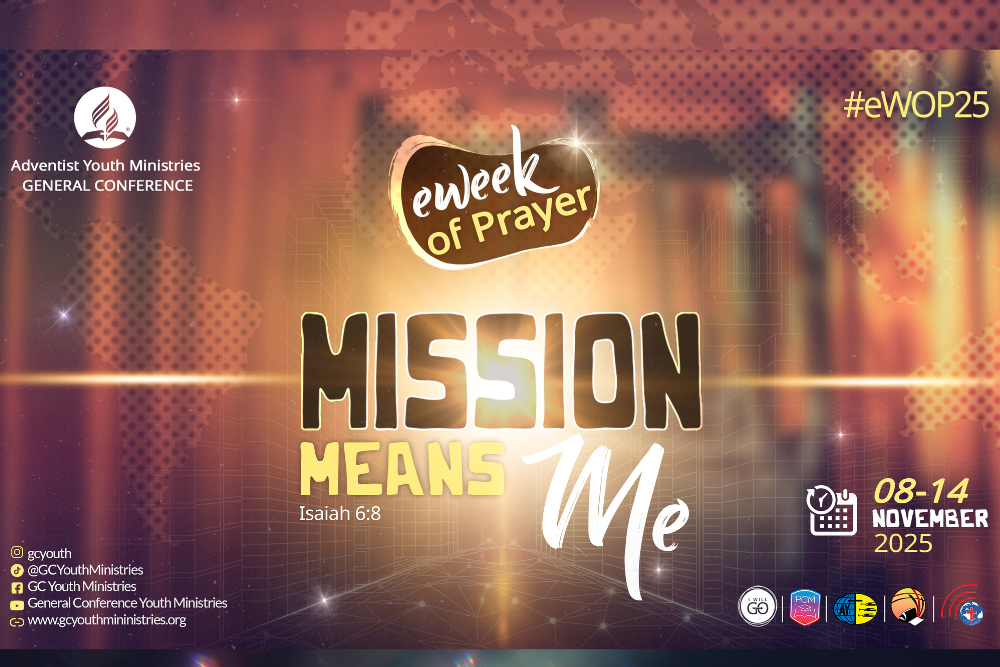
Mission Means Me - Isaiah 6:8

The Company You Keep — Reflection on 1 Corinthians 15:33

The Harvest Within

When Freedom Is Tainted