
Adventism As A Worldview
Ty Gibson • August 30, 2024

Adventism as a Worldview

By Ty Gibson

When I was a kid, there were only two things I knew with absolute certainty: pain and love.

Suffering defined my existence. Horrors haunted our little home—the horrors of rage and drug abuse and, worst of all, the horror of violence regularly inflicted upon my mother. But, then, in the midst of it all, there was a contrary mystery.


There was love.


I loved my mom, and I knew she loved me. I loved my younger brothers and little sister. As I grew up, the contrast and tension between these two inescapable forces hung before me like an unsolvable emotional enigma.


MOM GOES “WEIRD”

Fast forward a few years, and my mother came home one day announcing that she had become a “born again Seventh-day Adventist Christian,” whatever that was. She declared with a smile, “All of you are henceforth vegetarians, and you will never watch TV again.” What had happened to Mom? Was she going to be OK? Would we be OK, or would we all die for want of cartoons and what she was now calling “flesh foods”? Well, we soon learned what had happened to her. A strange person called an “evangelist”—whatever that was—had rolled up into our city and filled her “gullible” head with a bunch of weird new ideas.


Up to that point, God had never been mentioned in our home. Fortunately for the evangelist, however, my mom had been raised in a home that regarded the Bible as “the Word of God.” So, when the evangelist paid her a series of visits, all he had to do was quote Bible verses, frequently saying with an air of authority, “The Bible says,” with the strongly implied, “therefore, you ought.” She accepted what the Bible man told her and got “baptized”—whatever that was. She also immediately deployed the evangelist upon me. But much to his frustration, when he quoted the Bible to me, I just stared straight through him with a look of, “So what?” No disrespect was intended. I just had no idea what the Bible was, so it possessed no assumed authority for me. To my mind, it was in the category of literature, like Shakespeare and Dickens. The evangelist, known to baptize anyone who gave him a hearing, told the church members, “If I’ve ever met a lost soul beyond hope, it’s that Ty Gibson kid.”


EMPATHY WINS

The evangelist gave up on me, but my mom didn’t. Soon, a youth pastor showed up at our house to “befriend” me. I was resistant to his awkward overtures and found it annoying that he kept coming around trying to act “cool.” But he was different than the other guy. He didn’t come at me with authoritative religious declarations. Still, though, I found the idea of “God” ridiculous. His visits were becoming a habit pattern, so I decided to end his efforts to “win” my soul by unloading my unbelief on him.


“Listen, dude, you apparently find the idea of ‘God’ believable, but I don’t. Just look at this world. I don’t even love everybody like you say God does, but if I saw little kids starving to death, I’d feed them. I’m not all-powerful like you say God is, but if I saw a man beating his wife, I’d stop the monster. So don’t tell me about God, because 2+2=4, not 56, and this God idea does not match up with reality.”

To my surprise, he didn’t try to argue me into subjection. Instead, he seemed to genuinely empathize with my perplexity. “Yeah, this world is pretty messed up,” he said, “and I don’t understand why God lets it go on for another day.” At that moment, I felt a little bit of respect for the guy. At least he could see the world I saw and feel the feelings I felt. He promised to stop bothering me if I would simply read the first chapter of a book my mom had acquired from one of the church people. Wow, what a deal!


“Sure, dude, and goodbye.”


NEW EQUATION

Later that evening, I reluctantly opened the book and read the first sentence: “God is love” (1 John 4:8). I rolled my eyes and sighed, “Here we go.” But by the time I finished the chapter, a simple equation with massive explanatory power had formed in my mind:

Love—>Freedom—>Risk


Love requires freedom to exist, but freedom carries the risk that things might go against love. I sat there in a flooded state of “wow.” Suddenly, things began to make sense, not because I had suddenly adopted the view that the Bible is an authority to which I must yield, but because the idea itself possessed an inherent authority by means of the sense it was making of reality. The emotional weight I’d been feeling my entire life began to float above my heart. Within the space of an hour, a whole new way of viewing reality was dawning upon my mind.


“God is love.”


Those were the first theological words I ever read. Adventism gave me those words and the expansive perception of reality to which they grant access. What I needed was a way to make sense of the diametrically opposed forces of selfishness and love so obviously waging war within human beings. What I needed was a way to comprehend what’s going on in this world of ours so drenched in blood and tears. What I needed, in other words, was a worldview. And that’s precisely what Adventism gave me.


WORLDVIEW

A worldview is a composite of ideas that forms a perceptual lens through which a person tries to make sense of life. Everybody has a worldview. But while there are 7.3 billion people on the planet and hundreds of religions and philosophies, there are only five basic belief systems.


1. Naturalism—the atheist worldview—says that there is no such thing as evil as a moral category. All there is here is natural process. Suffering is part of that process and is necessary for the evolution of the strong and the elimination of the weak. Human beings are evolving animals governed by natural forces and, therefore, possess no actual free will. All notions of right and wrong, love and hate, mercy and justice, and accountability to a higher power are cultural constructs with no intrinsic basis in reality itself.


2. Pantheism—the all-is-god worldview—says that there is no personal God that exists distinct from the material world. Rather, nature itself constitutes a collective consciousness of divine proportions. Evil is a balancing force in nature, and suffering is part of the eternal cycle of life. Pantheism is basically a spiritualized version of naturalism.


3. Deterministic Theism—the control worldview—says that God’s main characteristic is power, and His primary objective is control. God predetermines all events, both the good and the bad, including each person’s eternal destiny, whether heaven or hell. Human beings are the subjects upon which God’s sovereign will acts and do not possess free will. Evil and suffering are ordained by God for His inscrutable purposes.


4. Appeasement Theism—the merit worldview—says God’s main characteristic is wrath. If we try hard enough, our deeds of obedience can earn His favor and avert His anger. Suffering is orchestrated by God for the satisfaction of His will.


5. Benevolent Theism—the love-and-liberty worldview—says that God’s defining characteristic is love, and His main objective is that we would be voluntary reciprocators of His love. Evil and suffering proceed from the misuse of free will for anti-love purposes, and the plan of salvation is the means by which God is eradicating evil from the world while preserving free will.


WORLDVIEW MATTERS

Okay, but why does a person’s worldview matter?


Quite frankly, because what a person believes about the basic content and configuration of reality will be the primary factor that shapes their character, behavior patterns, and relational dynamics. When we speak of worldviews, we are not discussing irrelevant differences with no inherent ramifications. Rather, each worldview constitutes a psychological template that drives quality of life. In the words of Ellen White:


“The whole spiritual life is molded by our conceptions of God; and if we cherish erroneous views of His character, our souls will sustain injury” (Ellen White, Review and Herald, January 14, 1890).

As a theological system, Adventism falls into the Benevolent Theism category. I would suggest, in fact, that Adventism has the unrealized capacity to articulate for the world the most compelling, coherent, and consistent rendering of Benevolent Theism conceivable.


But do allow me to qualify. This article is intended to cast a vision of the potential that lies within Adventism’s theological portfolio. It is not an examination of how we have failed to steward that potential. There will be those who will respond by saying something like, “What! That’s not the Adventism I know.” To you, I would say that the first step toward changing any situation is to positively articulate what it can be and to begin acting as though what we want to be true is true.

So, what might that theological vision look like?


GOD

Well, for starters, if we begin with the premise that “God is love,” we are face to face with the most beautiful core belief imaginable. To say that “God is love” is to say that God is essentially other-centered and self-giving. The idea is, quite frankly, breathtaking. From this foundation, the doctrine of the Trinity is logically deduced. If God were a solitary self, a rigid singularity, existing in a fundamental state of aloneness at some point in the far reaches of the past, it could not be said with any logical coherence that “God is love.” Love, by definition, requires a subject upon which to lavish its energy. If there is no subject, there is no love. Therefore, we believe God is a social unit rather than a solitary self. We believe God is composed of an interpersonal relationship of giving and receiving between three equally divine eternal persons. I would suggest that knowing God in this light is both rationally compelling and emotionally satisfying.


CREATION

Because God is love, God was impelled from within His own other-centered nature to create others with whom to share the bliss of a love-actuated existence. We believe, then, that creation is God’s love actualized in material form. For love to exist within creation, freewill was necessarily built into the system. By definition, love is voluntary. When Scripture says that God made humanity “in His own image,” this means that human beings were psychologically, emotionally, and volitionally engineered for other-centeredness. But right here it becomes immediately evident that there is a potential upside and a potential downside to freewill. If we are free to love one another, then we are also free to live for ourselves to the hurt of one another.


THE FALL

Because God is love, it follows that God does not exert exhaustive control over His creation. Tragically, the risk inherent in freewill was realized in the Fall of both humans and angels. As a result, we find ourselves living in the throes of a great controversy between good and evil, a war of wills, a conflict between other-centeredness and self-centeredness. Two diametrically opposed modes of existence are vying for our allegiance. Sin is not merely the breaking of rules imposed by a God of sovereign power, but the violation of a relational integrity that was engineered into reality by a God of sovereign love. The fact that evil and pain exist is evidence, not of God’s sovereign will being exerted upon the world, but of freewill gone bad in a world capable of noble moral splendor.


SALVATION

Again, because God is love, God could not, would not, abandon us to deception and destruction. God knew that the moment He would bring us into existence, He would love us above Himself. He knew, also, that if we were to turn from love to selfishness, He would keep on loving us at any cost to Himself and pursue us to the complete end of Himself. We can see, then, that the cross was in God’s view from the start. And He still created us! Sin is anti-love. As such, sin is also an anti-creational force that throws everything it enslaves into chaos, suffering, and death. Salvation is God’s plan for restoring love to humanity as our only mode of existence.


THE LAW

Because God is love, He has revealed to us the essence of His character in the form of His law, the Ten Commandments. The law is not a list of arbitrary rules that have no grounding in reality but rather a description of what love looks like in action. As such, the law is not a means of salvation, but a revelation, by contrast, of our fallen condition, awakening in us a sense of need for a Savior.


THE SABBATH

Because God is love, we are Sabbatarians. The Sabbath is embedded within reality, in the very cycle of time and in the very makeup of humanity. The Sabbath tells us who God is and who we are in relation to God. He is the Creator and we are the created. He is the Redeemer and we are the redeemed. In both creation and redemption, God accomplishes the work and we are dependent recipients of His gifts. The Sabbath is a weekly commemoration of God’s benevolent character, reminding us each seventh day that we are creatures who rest in His unearned love. The Sabbath truth is, therefore, the antithesis of legalism and self-dependence, when rightly understood.


ESCHATOLOGY

Because God is love, our entire eschatology centers on the difference between force and freedom in matters of worship. The crucial point of Daniel and Revelation is that religious systems that resort to coercion are diametrically opposed to the character of God. Love alone is the basis for all true worship.

You get the picture. Of course, I’m just scratching the surface here. Along with the sanctuary and the judgement, death and hell, the Second Coming, the Millennium, and the earth made new, Adventism possesses the raw theological materials from which to construct a worldview so rationally convincing and emotionally attractive that it very well could illuminate the whole earth with God’s glory (Revelation 18:1). Our total theology is simply and profoundly this: “God is love.” Then, operating from that premise, we can formulate a comprehensive understanding of the world and our place in it, the nature of evil and suffering, and the principles by which God has embarked upon the glorious enterprise of human salvation.


“God is love” in the most beautiful, meaningful, and liberating sense imaginable.


That’s all.


And that’s a lot.

That’s what Adventism communicated to an eighteen-year-old boy whose worldview would never be the same, and that’s what Adventism has the potential to communicate to the world.

original article: https://lightbearers.org/blog/adventism-as-worldview/


By HSDA Newsletter Team July 11, 2026
God Kept Me A Personal Testimony Shared in Trust - Ning Trouble | HSDA Newsletter Team There are moments in life when someone doesn’t just tell you a story they entrust you with their testimony. What I received was not simply information, but the lived experience of a woman who walked through darkness and survived by the mercy of God. She spoke to me personally. Her voice carried both pain and peace. Pain from what she had endured, and peace from what God had brought her through. Her life began with loss. She lost her mother at a very young age, and that early grief shaped much of her emotional journey. Growing up without that covering left her vulnerable in ways she could not fully understand at the time. Like many searching for love, stability, and belonging, she eventually entered a relationship believing she had found someone who would love and protect her. But what began as hope slowly became captivity. She described how the relationship changed over time how love turned into control, fear, emotional abuse, and then physical violence. Behind closed doors, she endured things no woman should ever have to experience. Yet she stayed, like so many do, holding on to the hope that things might change, especially as children came into the picture. Instead, the abuse deepened. There is a weight in hearing a woman describe not just pain, but survival how she learned to live in silence, how she carried fear while still trying to care for her children, how she functioned while breaking inside. Domestic violence does not only injure the body; it fractures the mind and slowly erodes a woman’s sense of self. Then came the night she will never forget. After the birth of her youngest child, the violence escalated to a level that almost took her life. In her own words, she described how a weapon was used against her body, causing catastrophic injuries. Her stomach was torn open, and in that moment, everything should have ended. But it did not. She told me how she escaped that house how she ran into the darkness of a country road while gravely wounded, her body broken, her strength fading. There were no words strong enough to fully capture that image: a woman walking through the night, fighting for her life, holding onto what remained of herself while her body was literally failing. And yet she lived. What struck me most was not only the brutality of what she endured, but the mystery of preservation. She said she did not lose as much blood as she should have. She knew without question that God had stepped in where no human help was present. “I should have died,” she said to me quietly. “But God kept me.” In that moment of testimony, it was clear this was not just survival, it was deliverance. She went on to share how recovery was not just physical, but deeply emotional and spiritual. Healing her body required surgery and time, but healing her mind and heart required something deeper, restoration. Trauma does not leave quickly. Fear does not disappear overnight. But slowly, through faith, support, and grace, she began to rebuild. What touched me most was her faith in the midst of it all. She did not only speak about what she suffered, She went on to publish a book, Ning Troubles, which detailed her struggles and how God preserved her. She saw her survival as evidence that her life still had purpose. She chose, over time, not to be defined by what was done to her, but by what God brought her through. Today, her testimony stands as a voice for women who are still in the place she once was, trapped, afraid, and unsure if escape is possible. Her life speaks quietly but powerfully: you can survive, and you can be healed. Domestic violence leaves scars that are both visible and invisible. But her story reminds us that even in the deepest suffering, God is still present. He sees. He keeps. He delivers. She is living proof that the end of abuse does not have to be the end of life. And as she shared with me personally, her words remain etched in my heart: “I should have died… but God kept me.”

By Pastor Paul Liburd July 11, 2026
God Can Restore the Years the Locusts Have Eaten By Pastor Paul Liburd | Handsworth Seventh-day Adventist Church "I will restore to you the years that the locusts have eaten." — Joel 2:25 I want to encourage you today with one simple but life-changing truth: God can restore. What have you lost? Have you lost opportunities, relationships, money, your health, or what you consider to be your best years? Perhaps you've lost your faith, your hope, or even your sense of purpose. Most of us carry regrets. We look back and think, If only I could do that again. If only I could turn back the clock. We imagine making different choices, saying different words, or taking a different path. Yet God gives us a wonderful promise that speaks directly into our losses and regrets. In Joel 2:25 He declares: "I will restore to you the years that the locusts have eaten." The Meaning Behind the Promise To appreciate the power of this promise, we need to understand what it meant to those who first heard it. Joel was speaking to an agricultural society whose livelihood depended entirely upon the harvest. Imagine spending months ploughing, sowing, and tending your fields, only to see a swarm of locusts descend. Within hours, an entire year's labour could disappear. Green fields became barren wastelands, and every hope for the future seemed lost. The devastation was overwhelming. Many of us understand that feeling—not because we've experienced literal locusts, but because circumstances have consumed years of our lives. Perhaps it was a failed relationship, poor decisions, addiction, illness, rebellion, or years spent pursuing the wrong priorities. Looking back, those years can feel wasted—years we can never recover. How often have you wished you could simply start again? The wonderful news of Joel 2:25 is this: Although we cannot turn back the clock, God can still restore. He can bring blessing where there has been loss, fruitfulness where there has been barrenness, and purpose where there has only been regret. The Locusts Were Not Outside God's Control There is, however, something in Joel's prophecy that many people overlook. God describes the locusts as: "My great army which I sent among you." (Joel 2:25) Think about that. The locusts were not outside God's control. God Himself says, "I sent them." Why would a loving God do such a thing? Because His people had drifted away from Him. They were travelling a path that would ultimately destroy them, and in His mercy God interrupted their journey. The locusts were not evidence that God had abandoned His people—they were evidence that He loved them enough to discipline them. He disrupted their plans so they would stop, reflect, and return to Him. The locusts were never intended to be the end of the story. They were a wake-up call. When God Uses Hardship Perhaps that speaks to your own life. Maybe you've experienced your own "locusts"—a painful disappointment, a devastating failure, financial loss, illness, broken relationships, or doors that unexpectedly closed. You may still wonder why those things happened. Could it be that God was using those painful circumstances to draw your attention back to Him? Throughout Scripture we see that God's discipline is never intended to destroy His children but to restore them. The purpose of the locusts was repentance. The purpose was renewal. The purpose was restoration. If God had continued blessing His people while they walked away from Him, those blessings would simply have enabled their rebellion. Instead, He lovingly interrupted their lives so they might return. Restoration Follows Repentance In Joel's message, restoration always follows repentance. The God who sent the warning is the same God who promised restoration. The God who allowed the interruption is the same God who offers hope for the future. And He offers that same hope today. Perhaps you look back and see wasted years. God says, "I can restore." Perhaps you see failure. God says, "I can restore." Perhaps you've wandered far from Him. God says, "Return to Me." The message of Joel is not merely that God restores years. It is that God restores people. When w e return to Him, we discover that His grace is greater than our failures, greater than our mistakes, and greater than anything the locusts have consumed. Can God Really Restore the Years? The answer is a resounding yes. There is nothing God cannot do. God can make your latter years so fruitful that the losses of the former years no longer define you. He can fill your life with such blessing, purpose, fruitfulness, and joy that you stop measuring life by what you have lost and begin rejoicing in what He has given. We know God is able. But perhaps you're asking another question: Will God do it for me? The good news is that Scripture answers that question. God's promise of restoration is connected to repentance. The locusts came because the people turned away from God. Restoration came when they turned back. God's invitation is wonderfully simple: "Return to Me, and I will bless you." That same principle still applies today. If you repent and return to God, He will begin His work of restoration in your life. The choice is yours. You can continue down your own path, or you can turn back to God. You can continue carrying your regrets, or you can place them into the hands of the One who restores. So the question is not whether God can restore. The question is whether you are willing to repent and return. A Prayer Heavenly Father, You have seen every mistake, every missed opportunity, and every moment of rebellion in my life. Yet You do not define me by my past. Today I repent and turn back to You. Please forgive me, receive me, and begin Your work of restoration in my life. Restore what sin has damaged. Restore what circumstances have stolen. Restore my joy, my hope, my purpose, and my walk with You. Thank You that Your grace is greater than my failures and Your mercy is new every morning. I pray this in the name of Jesus Christ. Amen.

By Marie Lee May 16, 2026
Anchored and Awake
By Pastor Ethan Mpozembizi April 11, 2026
The Cross and the Empty Tomb: An Invitation to New Life
By Pastor Ethan Mpozembizi January 17, 2026
Still Standing: A New Year, New Chapter

By HSDA Newsletter Team December 13, 2025
For the Boy Who Didn’t Come Home
By HSDA Youth Space Ministries November 1, 2025
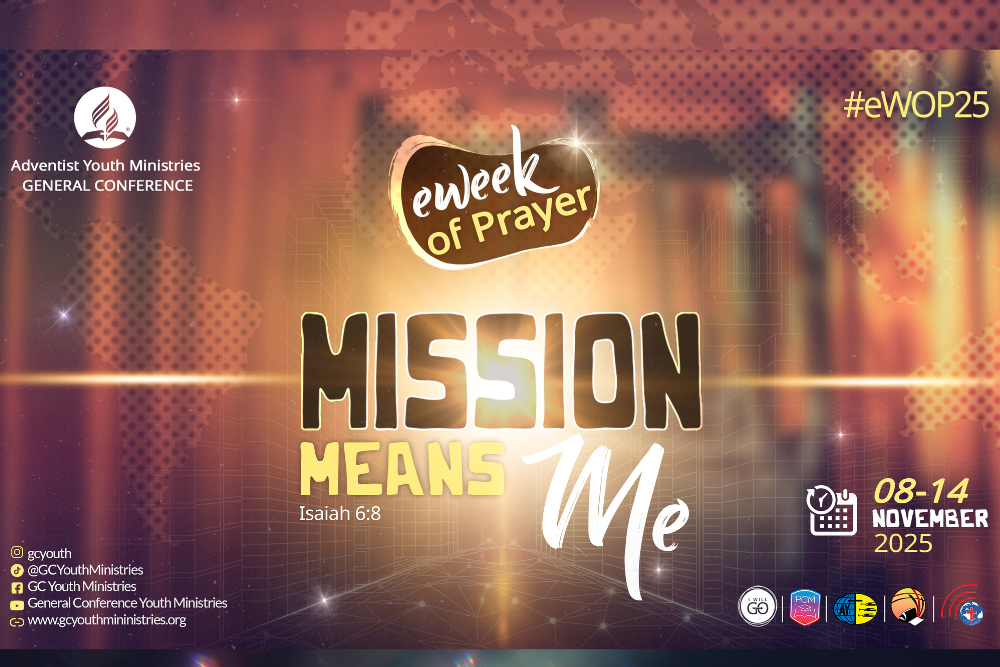
Mission Means Me - Isaiah 6:8
By Pastor Ethan Mpozembizi October 26, 2025
The Company You Keep — Reflection on 1 Corinthians 15:33
By Marie Lee October 25, 2025
The Harvest Within
By Pastor Ethan Mpozembizi October 4, 2025
A New Heart — Reflection on Ezekiel 36:26
Show More